


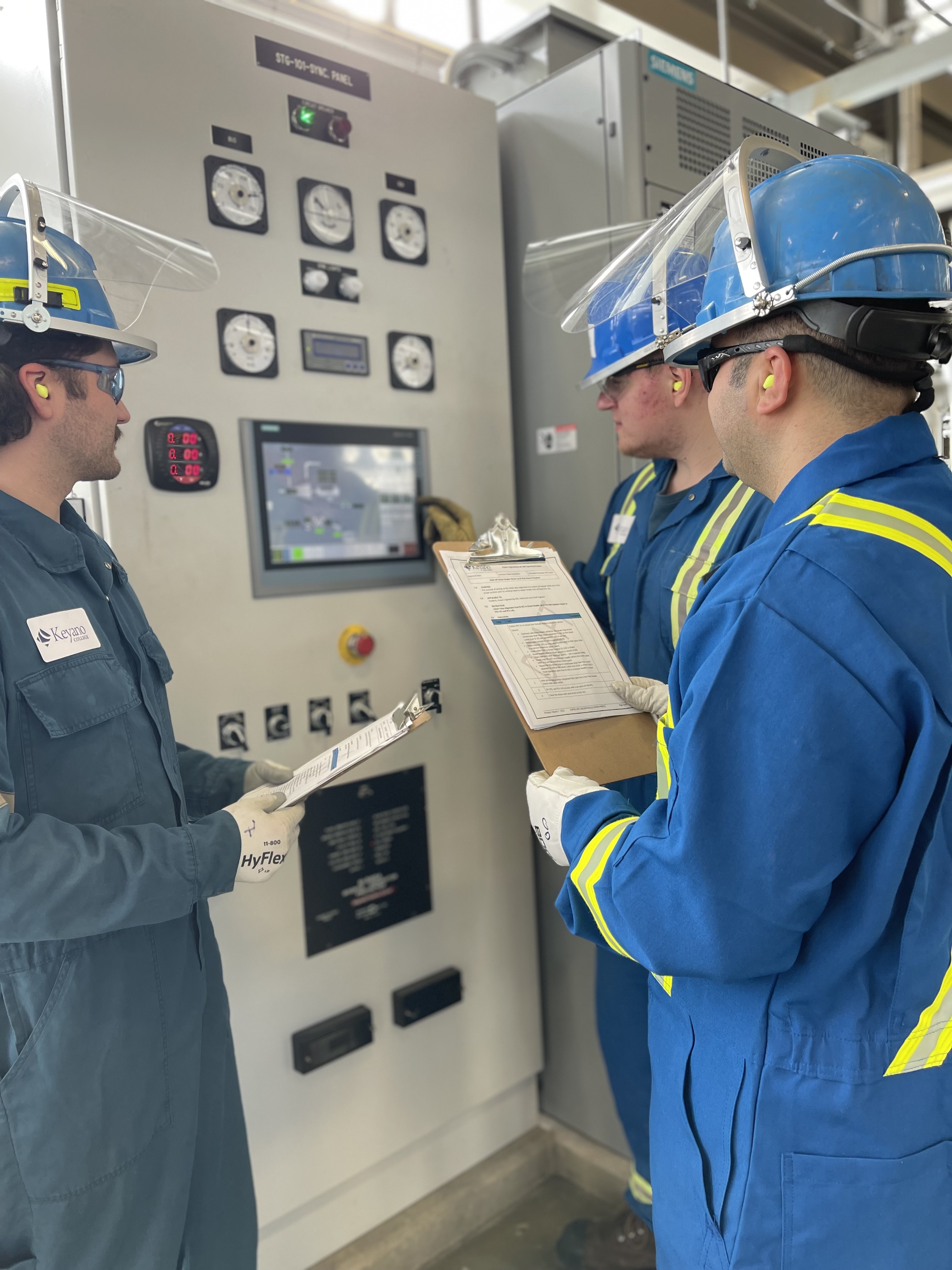
Power Engineering - 3rd Class Co-op

Open for Applications

Credential

Certificate

Length

4 months in-class +
6-month optional co-op

Delivery

In-person

Work Integrated Learning

Yes

International Student

Not Accepted

The Power Engineering - 3rd Class Co-op Program at Keyano College is a four-month technical training course designed for certified 4th Class Power Engineers who are ready to take the next step in their careers.

Students will deepen their understanding of high-pressure steam systems, turbines, compressors, and plant operations while preparing to write the 3rd Class Power Engineering certification exams. Eligible students may also complete a six-month, paid co-op work placement, gaining valuable industry experience and ABSA-recognized steam time.

What You'll Learn As A Power Engineer

Throughout the program, you will develop essential skills and gain knowledge in:

2 gear icons

High-Pressure Plant Operations

Operate and maintain high-pressure boilers, turbines, compressors, and auxiliary systems.

A screwdriver and a wrench

Industrial Troubleshooting

Diagnose and troubleshoot mechanical and process equipment in industrial environments.


Advanced System Monitoring

Interpret technical diagrams, controls, and operating data to support efficient plant performance.

Career Opportunities

As a certified or exam-qualified 3rd Class Power Engineer, you’ll be prepared for supervisory or advanced operator roles in:

  • Power generating plants
  • Oil & gas facilities
  • Heavy oil and petrochemical plants
  • Pulp and paper mills
  • Food and beverage manufacturing
  • Institutional facilities (hospitals, schools, large commercial buildings)

Frequently Asked Questions

A 3rd Class Power Engineer is certified to operate and maintain high-pressure steam and power systems. This level of certification allows for greater responsibility, including supervising plant operations and leading teams.

4th Class focuses on operating low- to medium-pressure systems. 3rd Class enables you to manage larger facilities and move into leadership roles.

No, the 3rd Class Power Engineering Co-op program is currently available to domestic students only. Due to the integrated co-op (work placement) component, this program is not eligible for international study permits.

If you are an international student interested in Power Engineering, please explore our other program options such as the 4th Class Comprehensive or Computer Managed Learning (CML) stream, which may be available to international applicants.

Yes, you will be prepared to write the 3rd Class Power Engineering exam as part of your diploma.

Graduates of the Power Engineering – 3rd Class Co-op Program are in demand across a wide range of industries that rely on high-pressure steam systems and mechanical plant operations. Industries that commonly hire 3rd Class Power Engineers include:

  • Power generation (utilities and energy providers)
  • Oil and gas processing facilities
  • Heavy oil and SAGD operations
  • Petrochemical and chemical manufacturing
  • Pulp and paper mills
  • Food and beverage production plants
  • Hospitals and health care facilities
  • Institutional buildings (universities, government buildings)
  • Large commercial operations (hotels, office towers, malls)
  • Renewable and emerging energy facilities

These industries depend on certified power engineers to ensure the safe, efficient, and compliant operation of their energy and mechanical systems.

Most co-op placements in the 3rd Class Power Engineering program are paid, as students gain hands-on industry experience with licensed employers.

However, compensation is determined by the employer and can vary depending on the placement. For the most accurate and up-to-date information about co-op opportunities and wages, we recommend speaking with a Student Advisor.

The capstone is optional. There is no formal work placement, but extensive lab-based and simulated industry training is included.

The optional co-op offers:

  • Paid, hands-on experience
  • ABSA-recognized steam time
  • Industry networking and employment pathways

Yes. If you’ve completed six months of ABSA-recognized steam time, you may be eligible for advanced credit in PECO 3500.

Ready To Apply?

Start your application and take the next step toward your program